

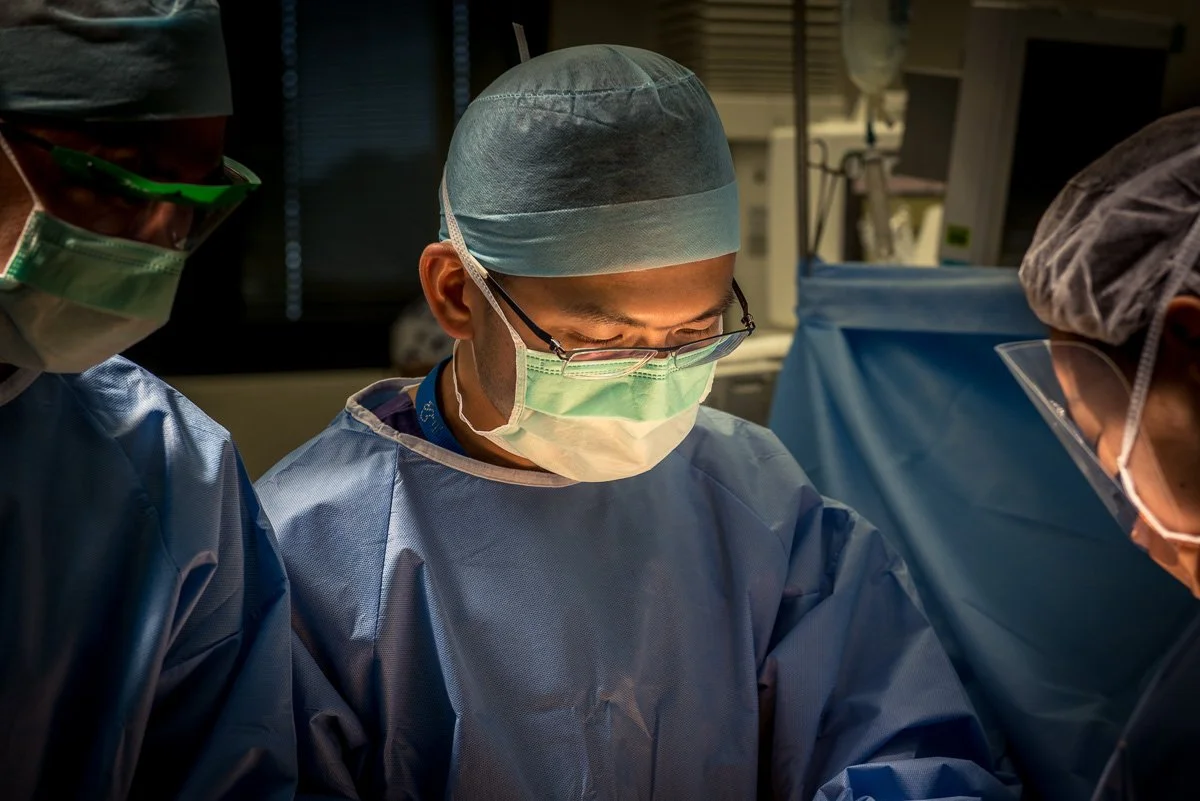
Adrenal Surgery
A/Prof. Lee has an outstanding surgical track record, based on his attention to detail and collaborative approach to patient care.
A/Prof. James Lee offers a comprehensive list of adrenal procedures for a variety of conditions.
A/Prof. James Lee is highly experienced in all types of Adrenal surgery and endeavours to provide the highest quality care as well as the best results for each of his patients.
What are the adrenal glands?
Adrenal glands are triangular shaped glands on top of your kidneys, typically 2 to 3 cm in size. Adrenal glands produce several hormones such as cortisol, aldosterone, adrenaline and noradrenaline which help control blood pressure, control your body’s response to stress, as well as some of the sex hormones.
When is adrenal surgery required?
You might require adrenal surgery (adrenalectomy) if the following occurs:
There is a tumour (may or may not be cancer) of the gland detected incidentally on scans (adrenal incidentaloma).
There is a cancer of the adrenal gland
There is overproduction of hormones which causes syndromes such as:
Cushing’s Syndrome (excess secretion of cortisol)
Conn’s Syndrome (excess secretion of aldosterone resulting in high blood pressure and blood potassium levels)
Phaeochromocytoma (excess secretion of adrenaline and noradrenaline resulting in high blood pressure, excess sweating, tremor, and anxiety)
What to expect from Adrenal surgery
There are a couple of different approaches to adrenal surgery. Discuss with A/Prof. Lee which is suited to your case:
Open surgery – traditionally, a large incision is needed to gain access to the adrenal glands which are located deep in the body. This approach is now reserved for patients with large tumours or cancers.
Laparoscopic surgery (posterior) – this keyhole approach through small incisions on the back allows for much faster recovery.
Laparoscopic surgery (anterior) – occasionally the keyhole incisions are made on the abdominal wall in the front.
For most patient undergoing adrenal surgery, the surgery is elective. This means that the surgery date is scheduled ahead of time, and you will be admitted to the hospital on the day of surgery. You will also meet your anaesthetist on the day, before being taken into the operating room. Regardless of the approach, adrenal surgery is performed under general anaesthesia, with you fully asleep. You will have a breathing tube inserted, and your vitals and breathing are constantly monitored throughout the procedure by the anaethestist.
For laparoscopic surgery, 3 – 4 small incisions are made under your ribs either on the back or front of your body. For open surgery, one incision is made either in the midline or under the ribs. The surgery generally lasts for 1 - 2 hours for keyhole surgery, or 2 – 4 hours for open surgery.
If you have keyhole surgery, within hours of your surgery, you should be able to walk around, eat, and drink normally. You are usually discharged the day after keyhole surgery. If you have open surgery, you may have to wait a bit longer to do walk, eat and drink. You will need to stay in the hospital for a few nights to properly recover.
Adrenal surgery with A/Prof. James Lee
If you require any type of adrenal surgery, A/Prof. James Lee ensures to provide his patients with the most education and communication possible throughout the course of the journey. If you have any questions or concerns regarding adrenal surgery, please don’t hesitate to get in touch with our team.
Disclaimer
The information provided here is intended for general reference and education only.
Always consult with A/Prof. Lee about your individual situation.
A/Prof. Lee cannot be held liable for any deviations from the details provided in this guide.
Adernal surgery FAQs
Download our FAQ sheet for more Adernal FAQs.
-
The adrenal gland is a triangular organ that sits on top of the kidney on both sides. It contains a cortex-outer layer and medulla-inner layer. These layers arise from different types of cells and therefore the symptoms experienced from tumours arising from these 2 distinct layers are very different. The outer layer produces hormones such as aldosterone and cortisol, which regulate a wide variety of bodily and cellular functions. The inner layer or medulla produces the hormones of "flight or fright" adrenaline and noradrenaline.
-
Adrenal surgery is required for one of the following situations:
Functionally overactive tumour producing excess hormones causing:
Conn's syndrome - retention of salt and water, loss of potassium and high blood pressure.
Cushing's syndrome – excess cortisol producing diabetes, hypertension, moon face, thin skin, and weight gain.
Phaeochromocytoma – excess adrenaline and noradrenaline producing drenching sweats, high blood pressure, a racing heart and severe headaches
Functionally overactive tumour producing excess hormones that can be measured on blood and urine tests, but without a full blown clinical syndrome
Functionally normal tumour, but which is of sufficient size or have other characteristics on imaging which make a cancer possible
For a cancer that has spread to the adrenal gland or a cancer that has arisen from the adrenal gland
-
The majority of adrenal tumours removed for hyperfunction are done by adrenal surgeons using a keyhole technique. Three to four small 5-10mm cuts are made in the abdomen (laparoscopic approach) or the back (retroperitoneal approach) to insert ports to perform the operation. The advantages of this technique are numerous and include 1-2 night hospital stay, less pain post surgery, earlier return to work and full activities. This is in comparison to the traditional open surgery via a large incision under the rib cage to remove these tumours. After open surgery, patients usually stay 5 - 7 days in the hospital.
Some tumours, however, are not suitable for the keyhole approach and still require a 10cm or greater incision because of the size of the tumour or a known diagnosis of cancer prior to the operation.
-
As with any operation, there is a risk of bleeding and infection in adrenal surgery. Rarely, a keyhole surgery may need to be converted to an open operation. However, this occurs only in 2-3% of patients. With an open operation, there is an increased risk of hernia formation in the wound.
Endocrine Surgery with A/Prof. James Lee
-
Thyroid Surgery
Thyroid Cancer, Multinodular Goitre, Thyroid Nodules, Graves’ Disease, Toxic Nodule…
-
Parathyroid Surgery
Primary and Renal Hyperparathyroidism, Minimally Invasive Parathyroidectomy…
-
Adrenal Surgery
Adrenal Adenoma, Functional Adenoma, Keyhole Surgery, Adrenal Cancer…
Get in touch
Please fill in the online enquiry form to ask a question or book an appointment. Or call today on (03) 9246 6466