

Parathyriod Surgery
A/Prof Lee has extensive surgical experience which is backed by his own research and publications since 2010.
As a qualified specialist in Parathyroid surgery, A/Prof. James Lee endeavours to provide the best quality care on your journey to recovery.
About the Parathyroid Glands
Where are the parathyroids and what do they do?
The 4 parathyroid glands are the size of a rice grain each and they sit behind the butterfly shaped thyroid gland in the neck. While there are usually 4 parathyroid glands, the exact number can occasionally vary, as can their exact locations. They secrete a hormone called parathyroid hormone (PTH), which acts on many organs including the gut, bones, and kidneys to increase the blood level of calcium. If you have been referred for consideration for parathyroid surgery by your doctor, it may be because they have found a high calcium or PTH level in your blood.
Why do I need a parathyroid surgery?
Removal of one or more of your parathyroid glands may be required for the following reasons:
Weakening of your bones due to osteopenia or osteoporosis
Kidney stones
Kidney failure
Very high blood calcium level
Tiredness, fatigue and forgetfulness thought to be due to a high PTH level
To prevent the complications of untreated hypercalcaemia in a healthy asymptomatic patient
What is involved with parathyroid surgery?
For most patients, parathyroid surgery is performed as an “elective procedure”. This means that the date of the surgery is scheduled in advance, and you will be admitted to the hospital on the day of the surgery, having fasted for an appropriate amount of time. You will meet your anaesthetist on the day of the surgery, prior to the procedure.
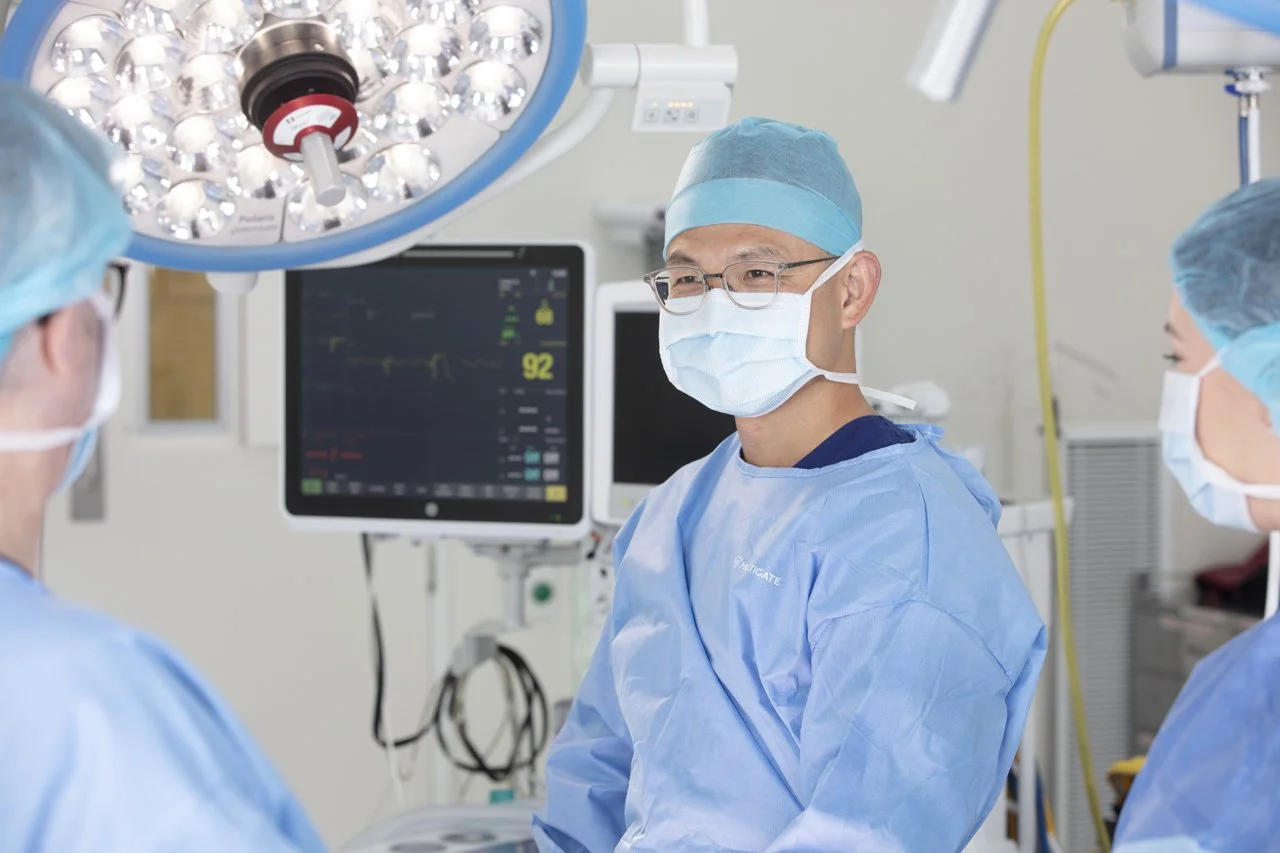
The surgery is performed under general anaesthesia, with you fully asleep. The general anaesthetic is administered in the operating room, with your vital signs being monitored the entire time. The surgery usually takes 1 to 2 hours, occasionally longer, depending on the extent of the surgery and the condition being treated. You will wake up in the recovery room, with a small dressing over the incision on your neck.
You will be moved to your ward bed approximately 1 hour after the completion of surgery, and you will be able to receive visitors at this time. You will be able to talk after surgery, and have something soft to eat once you are no longer drowsy.
Most patients are discharged the next morning. In some situations, a longer stay in hospital may be required for further observations, blood tests, or other reasons.
Download our FAQ sheet for more Thyroid and Parathyroid FAQs.
After the Surgery
It is common to experience one or more of the following symptoms after parathyroid surgery. These are usually mild to moderate and tend to improve over days to weeks, occasionally months. If symptoms are prolonged or severe, please contact A/Prof. Lee or your GP.
Pain or funny sensations around the wound and/or neck muscles (usually settles in 1–2 weeks)
Slight tightness or choking sensation in the throat
Numbness and/or swelling around the wound
Weakness of the voice
Some difficulty with swallowing
Headaches and tiredness
Transient tingling around the lips, fingertips, or feet
Important:
If you experience difficulty breathing, rapid neck swelling, or muscle spasms, please go to the nearest emergency department or call an ambulance immediately.
Wound Care
You will be discharged with a sticky bandage over your wound. Leave it in place until your first review appointment (2–3 weeks).
You may shower with the bandage on; gently dab it dry afterward.
Minor blood staining of the bandage is normal.
Mild and soft swelling around the wound during the first week is common.
If the wound becomes red, hot, and painful, it could indicate infection. This is rare, but if it occurs, please consult your GP or A/Prof. Lee.
Ongoing Care
The bandage will be replaced at your first follow-up with A/Prof. Lee.
Continue taping the wound for an additional 3 weeks using ½ inch skin-tone Micropore tape, available from your local chemist.
Once the tape is removed, apply Vitamin E cream daily and massage the wound to reduce swelling and improve scar appearance.
General Recovery Guidelines
Avoid vigorous activities for at least 3 weeks post-surgery.
Do not drive until you can turn your head comfortably without pain and are off all pain medications.
Gradually ease back into normal activities as neck pain and stiffness subside.
Medications
Pain Relief
You can take Panadol and/or Nurofen as per instructions.
You may also be discharged with prescription-strength pain medications if required.
Begin to wean them off as your symptoms allow.
Calcium Supplementation
Although surgery aims to lower calcium levels, a controlled decrease is important.
If calcium drops too quickly, symptoms like tingling and cramps may occur, even with normal lab results.
You may be prescribed calcium tablets to taper off over the first few weeks.
Blood calcium levels will need to be monitored weekly by your GP.
Calcium tablets should be taken on an empty stomach, such as 30 minutes before meals.
For Country Patients
If you cannot return to Melbourne for follow-up, please arrange ongoing care with your GP and discuss this with A/Prof. Lee before your discharge.
Disclaimer
The information provided here is intended for general reference and education only.
Please discuss your specific circumstances with A/Prof. Lee.
A/Prof. Lee cannot be held liable for any deviations from the information contained in this guide.
Parathyriod surgery FAQs
Download our FAQ sheet for more Thyroid and Parathyroid FAQs.
-
The parathyroid glands are the size of a rice grain and sit behind the butterfly shaped thyroid gland. There are usually 4 parathyroid glands. They secrete a hormone called parathyroid hormone (PTH), which acts on many organs including the stomach, bones, and kidneys to increase the blood level of calcium. If you have been referred for consideration for parathyroid surgery by your doctor, it may be because they have found a high calcium level in your blood.
-
Removal of one or more of your parathyroid glands is required for the following reasons:
Weakening of your bones producing osteopenia or osteoporosis
Kidney stones
Kidney failure
Very high blood calcium level
Tiredness, fatigue and forgetfulness
To prevent the complications of untreated hypercalcaemia in a healthy asymptomatic patient
Endocrine Surgery with A/Prof. James Lee
-
Thyroid Surgery
Thyroid Cancer, Multinodular Goitre, Thyroid Nodules, Graves’ Disease, Toxic Nodule…
-
Parathyroid Surgery
Primary and Renal Hyperparathyroidism, Minimally Invasive Parathyroidectomy…
-
Adrenal Surgery
Adrenal Adenoma, Functional Adenoma, Keyhole Surgery, Adrenal Cancer…
Get in touch
Please fill in the online enquiry form to ask a question or book an appointment. Or call today on (03) 9246 6466